Jun 26, 2026services
SMT Placement Machines: A Complete Guide to Gantry, Turret and Modular Systems
SMT Placement Machines: A Complete Guide to Gantry, Turret and Modular Systems
In the electronics manufacturing industry, Surface Mount Technology (SMT) production lines form the backbone of smart manufacturing. At the core of every SMT line lies the placement machine, which directly determines the assembly efficiency, precision and yield of electronic products.
Yet with the wide variety of SMT placement equipment available, many manufacturers still face confusion: what are the actual differences between gantry, turret and modular placement machines? Which type best fits my product requirements? This guide breaks down all these questions in full detail.
1. Three Main Types of SMT Placement Machines: Which Is Right for You?
Based on mechanical structure and placement mechanism, SMT placement machines fall into three primary categories: gantry, turret and hybrid/modular. Each type has distinct strengths — there is no universal "best" machine, only the best match for your specific production needs.
1.1 Gantry Placement Machines: High Precision, Fast Changeover–Top Choice for Low-to-Medium Volume Production
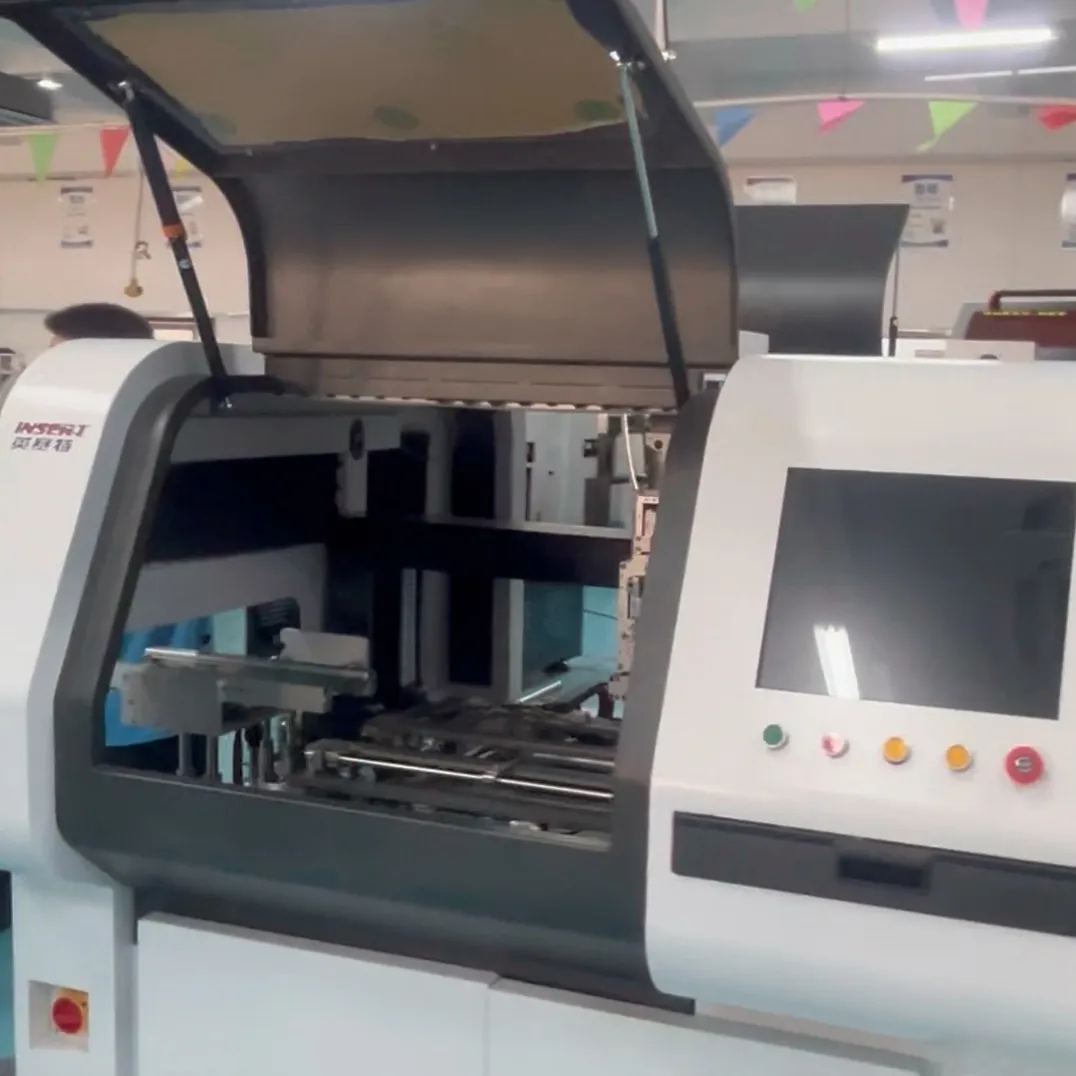
Gantry placement machines use linear motors or ball screws for their X/Y-axis drive system, which moves the placement head back and forth between component feeders and PCB pads.
Their key advantage is exceptional precision, typically reaching ±25μm, enabling them to handle components from tiny 0201 packages to large, odd-shaped parts. With flexible changeover capabilities, they are ideal for high-mix, low-volume production.
This makes them the go-to choice for startups and small-to-medium SMT facilities that do not require maximum placement speed but need equipment that can seamlessly handle five to six product changeovers per day.
1.2 Turret Placement Machines: Ultimate Speed–Purpose-Built for High-Volume Mass Production
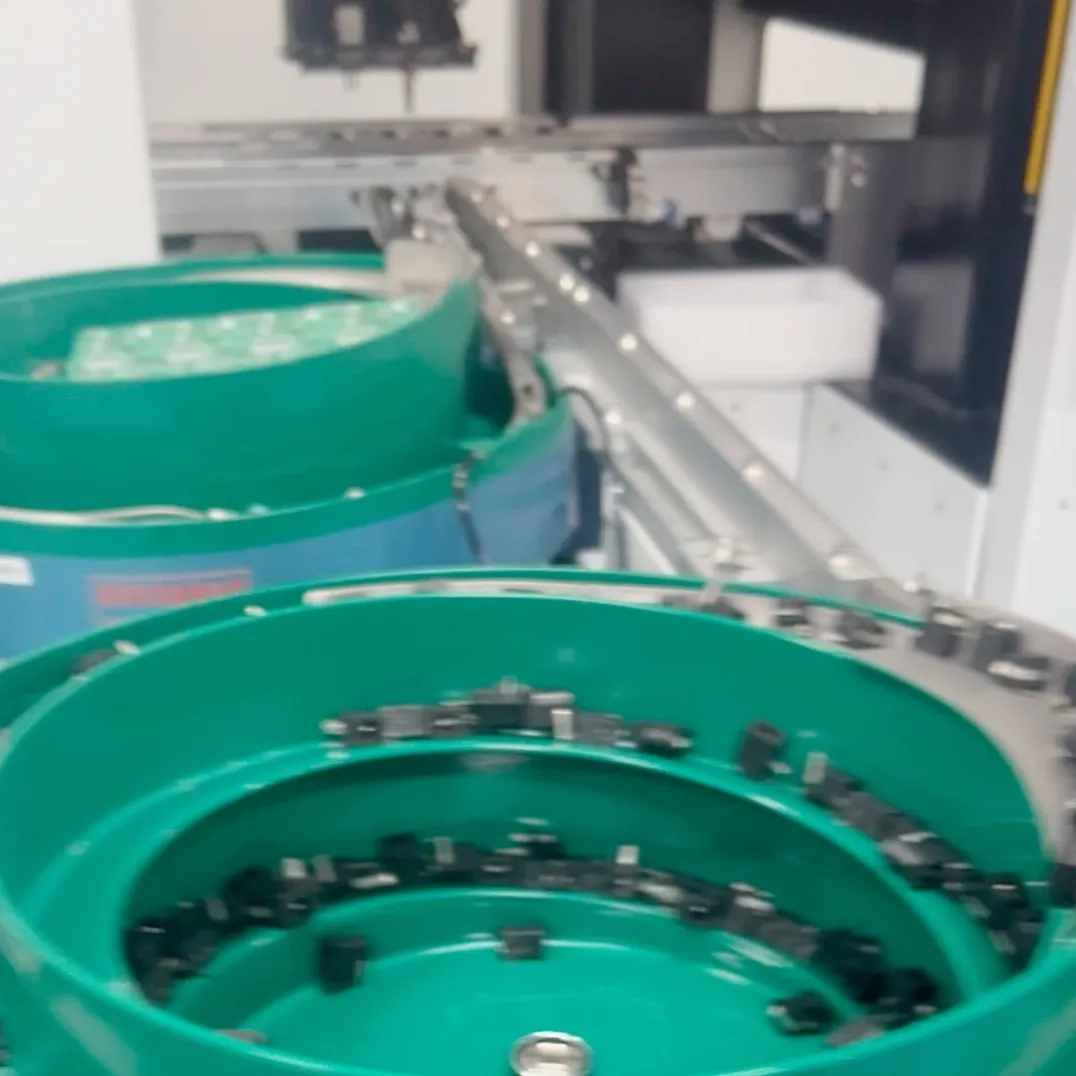
Turret machines integrate multiple placement heads on a rotating turret, allowing component pickup, vision inspection and placement to occur simultaneously. Single-machine throughput can reach 80,000–120,000 components per hour (CPH), making them perfect for mass production of a single product.
However, they have notable limitations: they are sensitive to component height and weight, only support tape-and-reel or bulk-packaged components, and perform poorly with odd-shaped parts. They also require long changeover times, occupy large floor space and generate high noise levels. With the rise of high-speed modular machines, the market share of pure turret machines is gradually declining.
1.3 Modular (Hybrid) Placement Machines: High Scalability –Integrated Solutions for Smart Production Lines
Modular architecture is the dominant design for today’s high-end placement machines. Each independent placement module features multiple cantilevers and placement heads that operate in parallel. Some models combine the precision of gantry machines with the speed of turret systems, enhanced by AI-powered scheduling algorithms.
Their key strength is scalability: lines can be configured with 4–8 modules, delivering total throughput of 90,000–180,000 CPH while handling components from 0402 packages up to 45mm in size. Modules are synchronized via 5G industrial LAN, reducing overall line component reject rate to below 0.05%. This format is suited for medium-to-large factories that require high-volume production with a degree of production flexibility.
2. What Equipment Makes Up a Complete SMT Production Line?
The placement machine is the core of an SMT line, but it is far from the only piece of equipment. A complete SMT production line is built around four core processes: solder paste printing → component placement → reflow soldering → inspection.
Front-End Processes: Solder Paste Printing and Preparation
- PCB Loader: Installed at the start of the line, it automatically feeds bare PCB boards into the solder paste printer, eliminating manual loading. With SMEMA signal interfaces, it enables fully automated coordination across the entire production line.
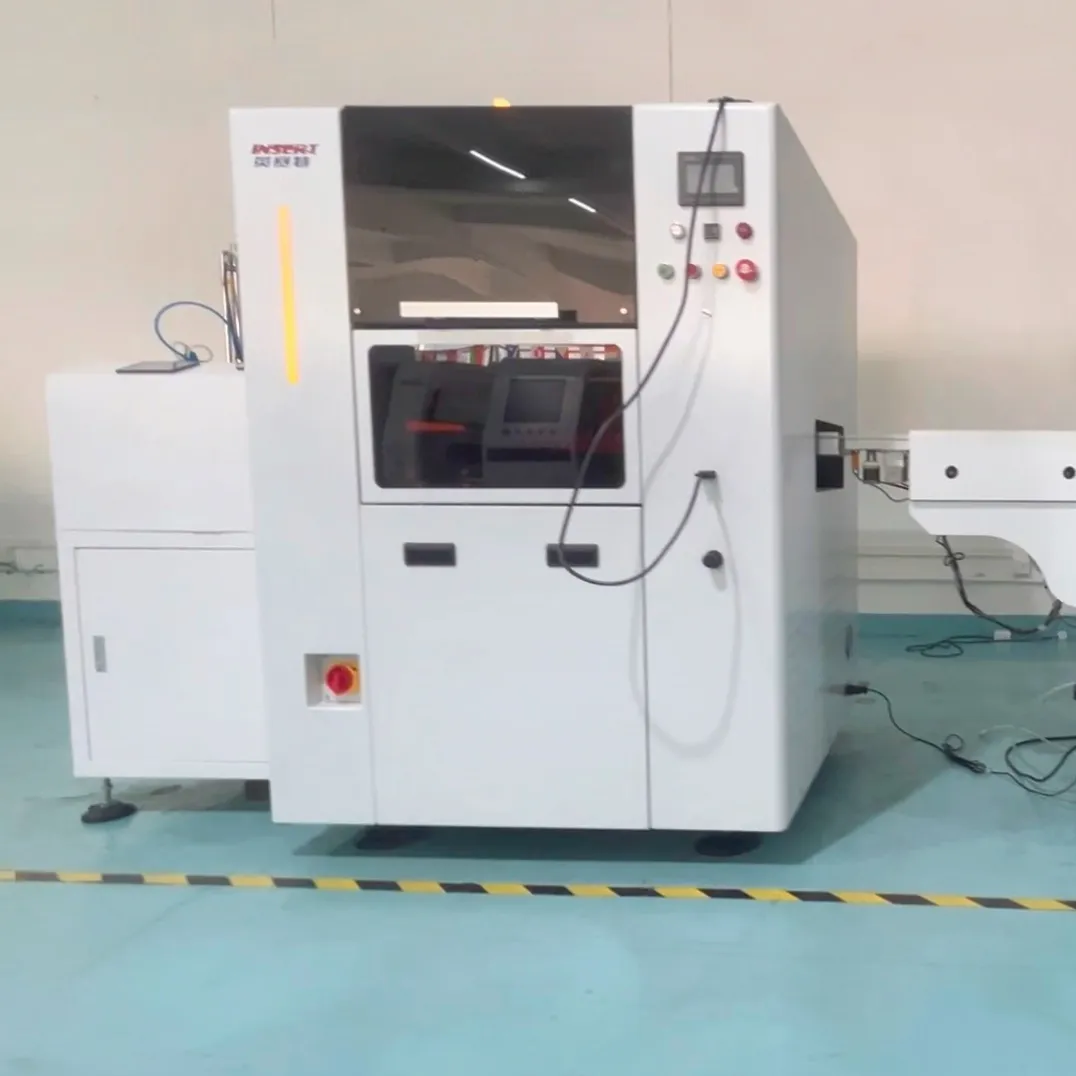
- Solder Paste Printer: Applies solder paste precisely to PCB pads. High-end models support semiconductor ball mounting processes for 0.07mm diameter balls, with a printing repeat accuracy of ±0.025mm.
Core Process: Component Placement
SMT Placement Machine: Picks electronic components from feeders and places them on designated PCB pads.
Production lines typically use a combination of high-speed machines and multi-function machines: high-speed models handle large volumes of passive components (resistors, capacitors), while multi-function machines place odd-shaped parts and high-precision chips. Working in tandem, they deliver an optimal balance of throughput and precision.
Back-End Processes: Soldering and Inspection
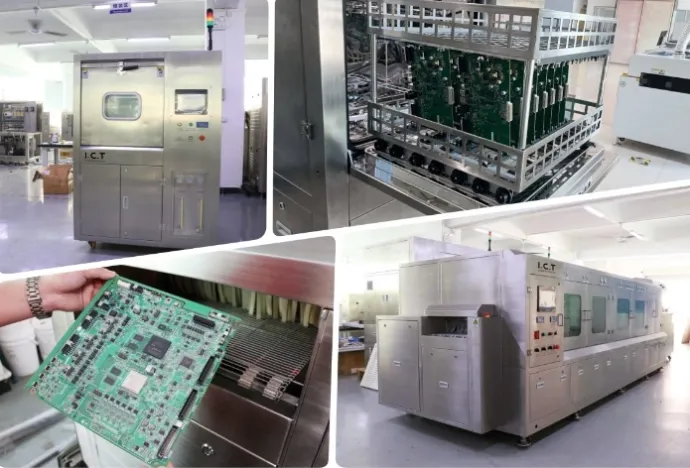
- Reflow Oven: Melts solder paste through multi-zone temperature control, forming reliable electrical connections between components and the PCB.
- Solder Paste Inspection (SPI): Uses 3D optical scanning to measure solder paste volume, thickness and offset, providing real-time feedback on printing defects.
- Automated Optical Inspection (AOI): Detects post-placement defects such as wrong components, missing parts and polarity errors, with inspection precision down to 0.01mm.
3. Where Are SMT Placement Machines Used? A Full Breakdown of 7 Key Application Sectors
SMT placement machines are used across nearly all segments of electronics manufacturing. Based on end-market applications, the key sectors include:
Consumer Electronics
This is the largest application market for placement machines, accounting for the biggest share of SMT equipment demand. PCBA motherboards for smartphones, tablets, smartwatches, Bluetooth earbuds and TWS headsets demand both high placement precision and speed. High-speed modular machines and mass-production lines dominate this sector.
Network & Telecommunications
For 5G base stations, routers, switches and optical modules, RF modules and optical transceivers require extremely high placement accuracy. Fine-pitch QFP and BGA packages demand placement precision down to ±10μm, requiring dedicated high-precision placement machines or high-end modular systems.
Automotive Electronics
This is one of the fastest-growing segments in the SMT industry, driven by explosive demand for electronic control systems in new energy vehicles. Placement for automotive ECUs, BMS battery management systems and ADAS sensor modules requires both precision and reliability. These applications often use long PCBs (500mm–1200mm), requiring dedicated long-board placement machines.
Medical Devices
Medical electronics impose extremely strict requirements for placement accuracy and stability. Control boards for electrocardiographs, patient monitors and implantable devices feature a wide mix of component types and low production volumes, but demand exceptional reliability. Most production in this sector uses multi-function odd-form placement machines for high-precision assembly.
Industrial Control
Placement for industrial control products such as PLCs, servo drives and frequency inverters involves a diverse component mix, often including large connectors, relays and other odd-shaped parts. These scenarios are best suited for medium-speed, high-precision gantry placement machines: they do not require maximum speed, but offer flexible changeover and reliable handling of irregular components.
LED Lighting
High-volume production of LED light strips and display modules requires moderate throughput with a relatively simple component mix, placing a premium on cost-effectiveness. Domestic Chinese manufacturers such as Kangput offer dedicated models for LED lighting that keep component reject rates below 0.1%, at just 40% of the price of comparable imported machines.
Aerospace & Defense
This sector has the highest requirements for placement reliability, with strict demands for full component traceability throughout production. High-reliability lines typically use a mixed configuration of imported high-end machines and domestic brands, balancing precision assurance with cost control.
- The Rise of Domestic Chinese SMT Machines: The Optimal Choice for Low-to-Medium Volume Production
In 2026, the market penetration of domestically manufactured SMT placement machines in China’s mid-range consumer electronics production lines is projected to exceed 68%. Domestic machines cost only 30%–50% of comparable imported models, with around 40% lower maintenance costs, cutting the investment payback period by 1–2 years.
More importantly, domestic placement machines are tailored to the pain points of Chinese factories: high-mix, low-volume production. Their modular architecture and programmable fixtures enable full product changeover in under 15 minutes, reducing setup time by over 40% compared to imported equipment — metrics that are critical to efficiency in small-batch manufacturing.
Take Insight (IST), the official domestic service provider for Dengxin Technology, as an example. Its product portfolio covers R&D prototyping, small-to-medium batch production and high-mix mixed-line manufacturing, with deeply optimized software and changeover workflows for frequent product switching.
For components, it offers premium specifications at its price point: standard features include Panasonic servo motors, THK ground ball screws and closed-loop control with magnetic scales on the X/Y axes, delivering ±30μm placement accuracy and stable handling of 0201 components. It has built a strong reputation across consumer electronics, home appliances, industrial control boards and SMT R&D prototyping applications. Real-world user testing also confirms that Kangput delivers satisfactory performance for 0201 component placement.
In addition, both brands offer full-line equipment including printers, reflow ovens and wave soldering machines, enabling one-stop procurement and unified after-sales support and maintenance for enterprises.
Final Thoughts
Selecting the right placement machine is not about choosing the most expensive model — it is about choosing the best fit. Understanding the positioning of the three machine types, mastering the logic of full-line configuration and aligning equipment with your application sector are the keys to making a scientifically sound selection.
If you are struggling with equipment selection, the most practical advice is to bring your most challenging PCB board to the equipment manufacturer’s facility for an on-site trial. Verify placement accuracy and changeover efficiency firsthand, and the right choice will become clear.