Jul 5, 2026services
The trajectory of precision: The birth of a circuit board - A comprehensive analysis of the SMT manufacturing process
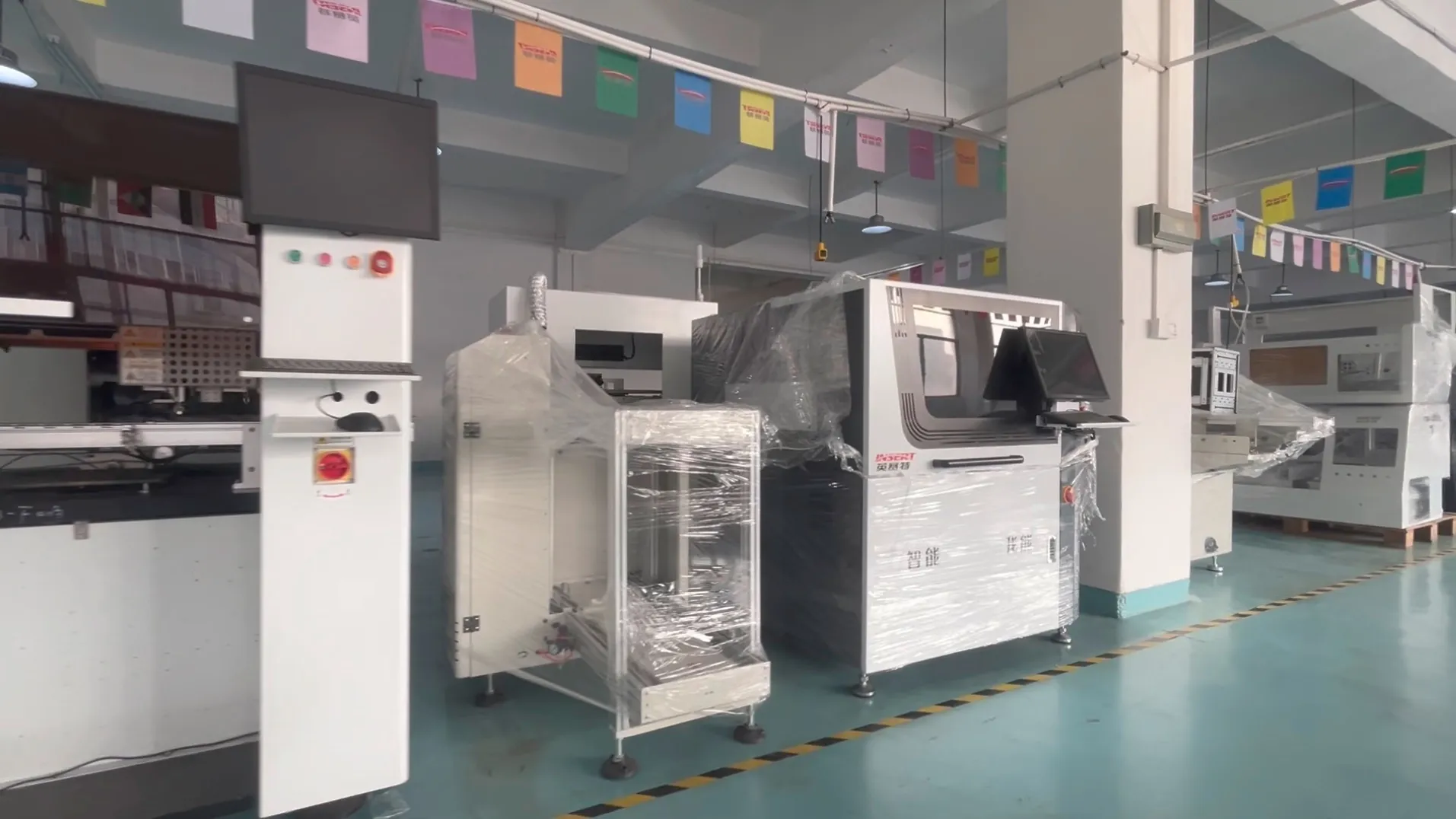
The trajectory of precision: The birth of a circuit board - A comprehensive analysis of the SMT manufacturing process
In the electronic world, the operation of every intelligent device is based on the collaboration of countless tiny electronic components. To ensure that these components are accurately positioned, soldered, and connected to form a complete circuit system, a process known as SMT (Surface Mount Technology) is indispensable. SMT is not simply "applying components"; it is a highly automated and highly precise manufacturing path that is the key process in transforming the blueprint of modern electronic products into reality. This article will provide a professional perspective to take you through a comprehensive understanding of - exactly what is the process of SMT and how does it support the entire electronic era?
1. The Essence of SMT: Making Micro Manufacturing Possible
Before understanding the process, one must first grasp the essence of SMT. SMT achieves the construction and functional connection of circuits by directly attaching miniature electronic components to the surface of a circuit board (PCB). Unlike traditional through-hole soldering, SMT does not require drilling holes on the PCB; instead, it relies on multiple steps such as solder paste application, mounting, heating, and inspection to ensure that the components are firmly "attached" and "welded" to the circuit board. This technology has enabled electronic devices to make a leap from "large" to "small" and from "slow" to "fast". It has made mobile phones thinner, computers lighter, and devices more intelligent. But all of this is not a miracle; it is the rigorous and orderly process logic that supports it.
2. Overview of the SMT Process Flow: The Precise Journey from Blank Board to Finished Product
How does a blank circuit board transform into a core component capable of powering technological devices?
1.The entire process typically consists of the following eight core steps: Solder Paste Printing
2. Component Placement
3. Reflow Soldering
4. Optical Inspection (AOI)
5. Function Testing (FCT)
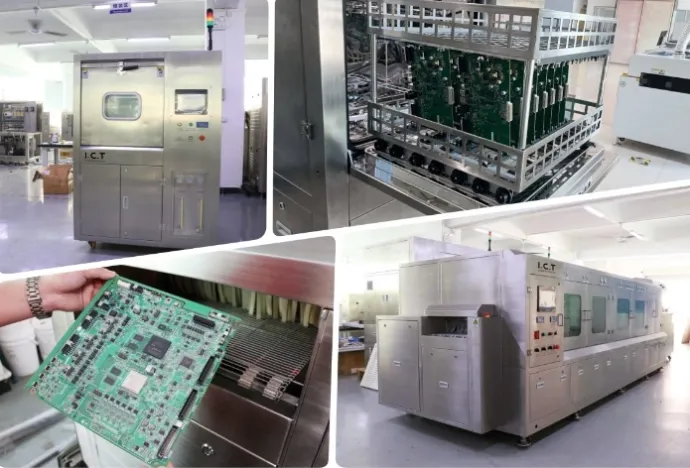
6. Cleaning and Post-Treatment
7. Board Separation and Packaging
8. Quality Traceability and Data Analysis
These steps are closely connected and cannot be missing any one of them. Each step affects the performance and stability of the final product. Next, we will delve into the core points of each process step by step.
3. Solder Paste Printing: The Precise Starting Point
The first step in the SMT process is solder paste printing. The role of solder paste is similar to that of "glue" and "conductor" for electronic components. It determines whether the soldering is firm and whether the signal transmission is stable. In this stage, the solder paste is precisely printed onto the pads of the PCB through a metal mesh. Every pad position, thickness, and shape must be strictly matched with the design. Any printing error will be magnified in the subsequent assembly and soldering processes, affecting the reliability of the entire circuit. Therefore, solder paste printing is called the "primary precision checkpoint" of SMT.
4. Solder Paste Application: The Fusion of Speed and Precision
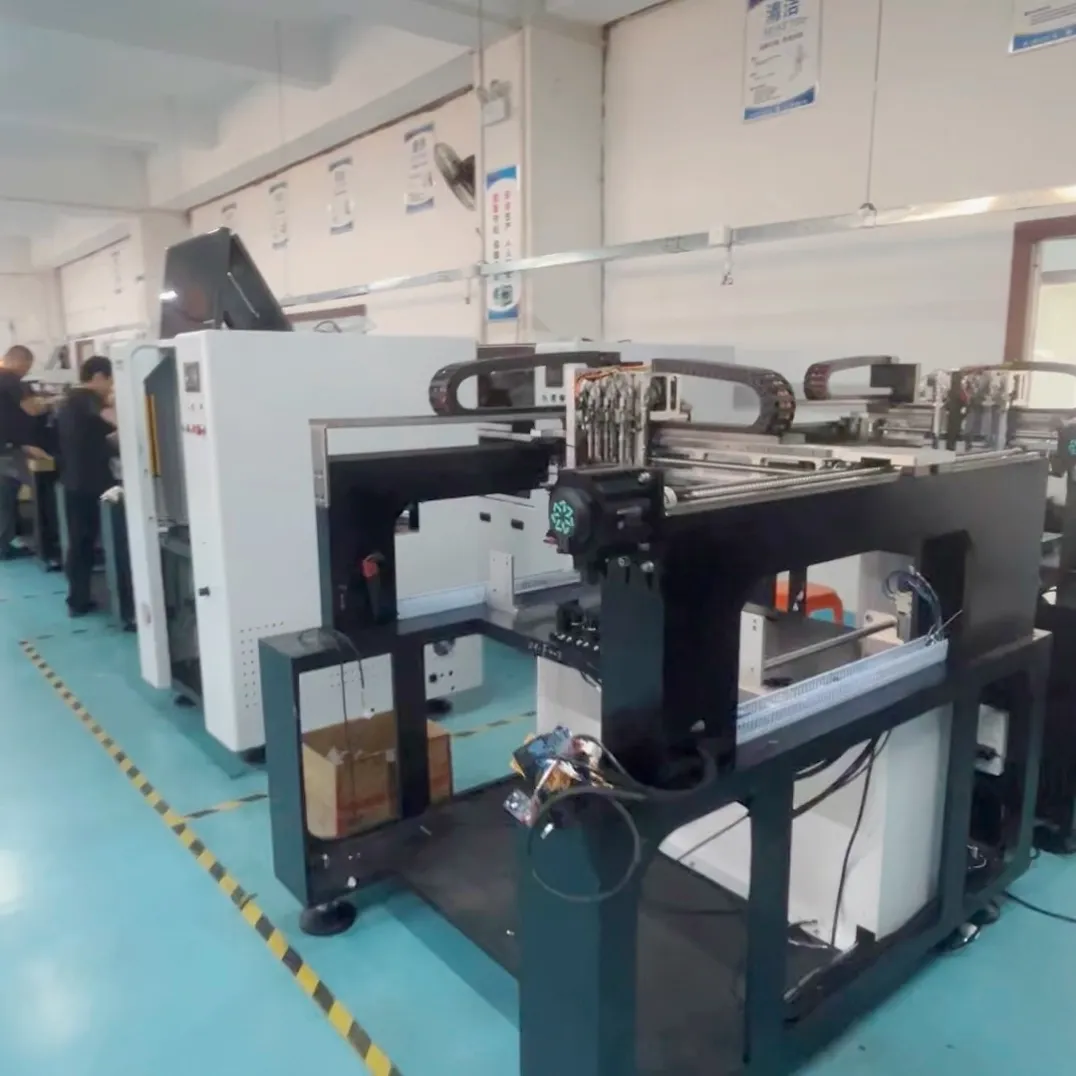
After the solder paste is printed, the reflow soldering machine takes the stage - this is a process that tests both speed and precision. The machine uses high-speed suction nozzles to precisely attach hundreds or thousands of electronic components to the corresponding pads at a micron-level accuracy. Within each second, the reflow soldering machine can complete the precise placement of tens to hundreds of components. During this process, parameters such as the soldering angle, pressure, and position deviation are all strictly controlled. Mistakes like incorrect placement, missed placement, or reverse placement can cause the circuit to malfunction. The automation and precision of the SMT process are most fully demonstrated in the solder paste application stage.
5. Reflow Soldering: Making Connections Permanent
After the mounting process is completed, all components are temporarily held in place by the solder paste. To make them truly stable, they must undergo reflow soldering. The circuit board is sent into a high-temperature furnace, which goes through four stages: "preheating - holding - reflow - cooling". When the temperature reaches the melting point of the solder paste, the metal particles in the solder paste melt and bond with the component pads, forming a firm solder joint. The temperature curve throughout the entire soldering process is crucial: too low a temperature will result in an unstable solder joint, while too high a temperature may damage the components. Therefore, reflow soldering is not just "heating", but rather a controlled physical and chemical reaction - it determines the long-term reliability of the circuit connections.
6. Inspection and Testing: Ensure each circuit board is "healthy and error-free"
After the welding process is completed, it does not mean the task is over. The next step is the crucial quality inspection phase. The most common method of inspection is AOI (Automatic Optical Inspection). The system scans each component and solder joint using a high-resolution camera to identify issues such as position deviation, incomplete welding, insufficient welding, and short circuits. After passing the inspection, functional testing (FCT) is required. This stage verifies whether the circuit can conduct electricity normally and whether the signals are complete. Throughout the SMT process, the inspection环节 acts as a "quality checkpoint". It not only screens for problems but also reconfirms the manufacturing process.
7. Post-processing and Board Splitting: Making the Product More Perfect
The circuit boards that have passed the inspection will enter the post-processing stage. This includes processes such as cleaning residual flux, surface protection, and board splitting. Especially in the production of multi-layer boards, the accuracy of board splitting determines the appearance and integrity of the final product. Every line of cut and every round corner must comply with the specifications to avoid stress causing the PCB to deform. At this point, a complete electronic circuit board can be truly regarded as "born".
8. Data and Traceability: The Intelligent Extension of Manufacturing
Modern SMT is not merely a physical assembly process; it also involves the real-time collection and analysis of production data. Through digital systems, manufacturers can track the component batch, printing parameters, welding curves, and test results of each circuit board, achieving full traceability throughout the process. These data make the manufacturing process more transparent and quality control more scientific. Future SMT production will be entirely driven by data.
9. Ingester SMT: Self-operated PCBA One-stop Service
After completing data traceability and analysis, the value of the manufacturing process needs to be further extended through a more efficient, stable and transparent service system. Jiali Chuang relies on its own production line to provide one-stop PCBA services covering PCB manufacturing, component procurement and SMT assembly. This has improved delivery efficiency and ensured product quality, enabling the R&D team to complete the entire process from design to small-scale verification in a shorter period of time.
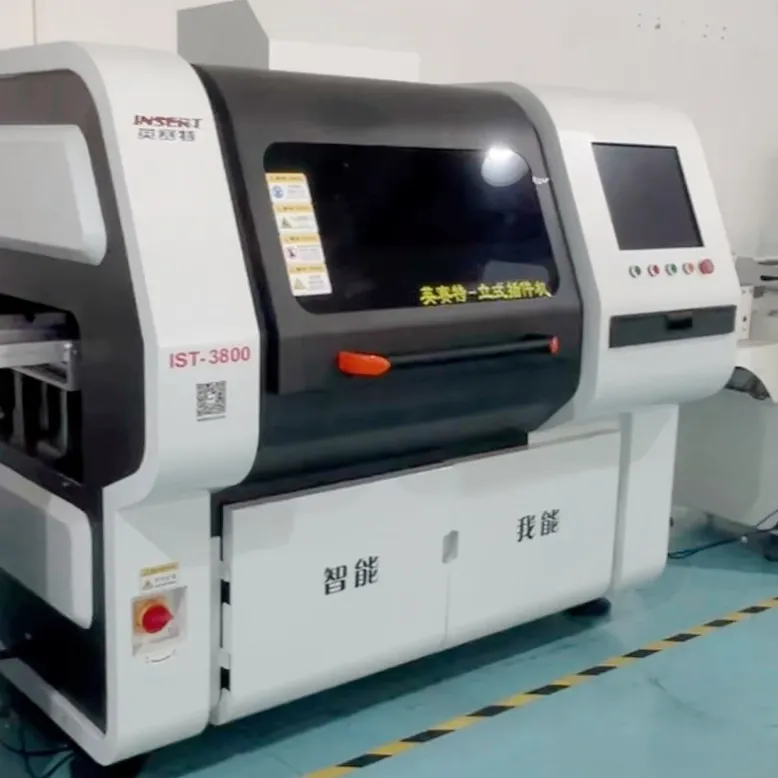
Insite's self-operated SMT has a highly automated production system: it is equipped with over 500 high-speed surface mounters and 300 "assembly-inspection integrated" production lines. It is also equipped with professional equipment such as nitrogen and argon reflow soldering, 3D AOI, 3D X-ray and flying probe testing, ensuring stable, controllable and traceable production throughout the process. Whether it is single/double-sided mounting, DIP insertion, or high-precision component welding, all can be completed under strict process standards.
In terms of components, Inseet offers free warehousing and bulk purchasing services, helping customers reduce supply chain management costs. At the same time, an exclusive customer service team provides full follow-up, making demand responses more efficient and communication smoother. With the transparent process and stable technology brought by the self-operated system, Jiali Chuang has achieved true one-stop PCBA delivery, effectively reducing costs and improving efficiency for the R&D team.
10. Conclusion: Each circuit board is a masterpiece of craftsmanship
From stencil printing to reflow soldering, from inspection to board separation, every step of the SMT process involves precise control and technical wisdom. It arranges micrometer-sized components into a system, turns abstract circuit logic into reality, and truly brings technology into people's lives. And an intelligent manufacturing platform like Inseet SMT makes this complex process simple, efficient, and reliable. It allows designers to focus on creativity and makes manufacturing an avenue for realizing innovation. Every soldering operation in SMT is an embodiment of modern manufacturing spirit - precise, rigorous, and reliable. On this invisible manufacturing line, the soul of technology is being welded, connected, and shaped bit by bit.