Jul 26, 2026Success Stories
Solution for SMT production line of humanoid robot sensor module
The SMT production line for humanoid robot sensor modules needs to strike a balance between "high precision" and "high flexibility" - it has to handle tiny MEMS sensors and irregular
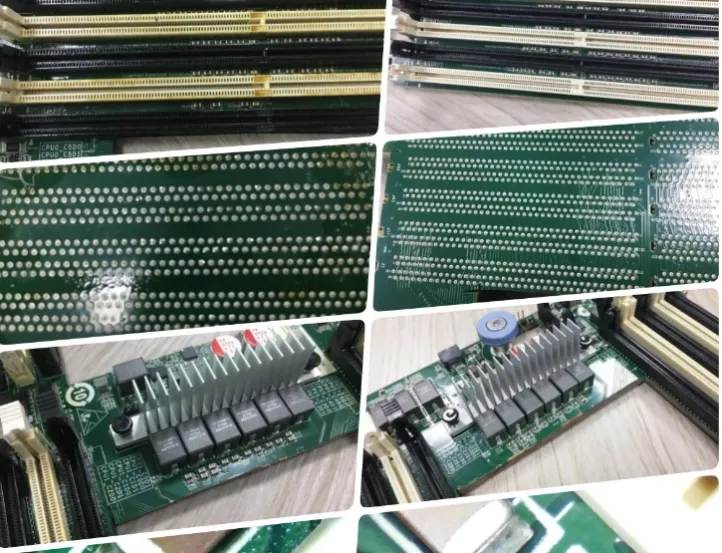
Solution for SMT production line of humanoid robot sensor module
The SMT production line for humanoid robot sensor modules needs to strike a balance between "high precision" and "high flexibility" - it has to handle tiny MEMS sensors and irregular connectors, and also cope with the production switching of multiple varieties and small batches. The following discusses equipment selection, process control, inspection...
The SMT production line for the humanoid robot sensor module needs to strike a balance between "high precision" and "high flexibility" - it has to handle tiny MEMS sensors and irregular connectors, and also cope with the production switching of multiple varieties and small batches. Below, from the four dimensions of equipment selection, process control, inspection, and overall line coordination, a complete solution for the SMT production line of the humanoid robot sensor module is organized.
1. Core Equipment Selection Plan
The PCBA of the sensor module usually integrates high-precision chips and special components, and has extremely high requirements for assembly. The solution should focus on "high precision + high adaptability" equipment. Especially for the sensor module of humanoid robots, which is a tiny and complex circuit carrier, the equipment selection directly determines the final performance.
High-precision Soldering Equipment
It is recommended to use high-end surface mounters such as INSAITE. These devices have flexible suction cup configurations and can quickly switch to adapt to the assembly requirements from 0402, 0201, etc., to special connectors. The advanced visual positioning system they are equipped with can ensure extremely small soldering deviations, which are crucial for the fine pads and precise spacing in the sensor module.
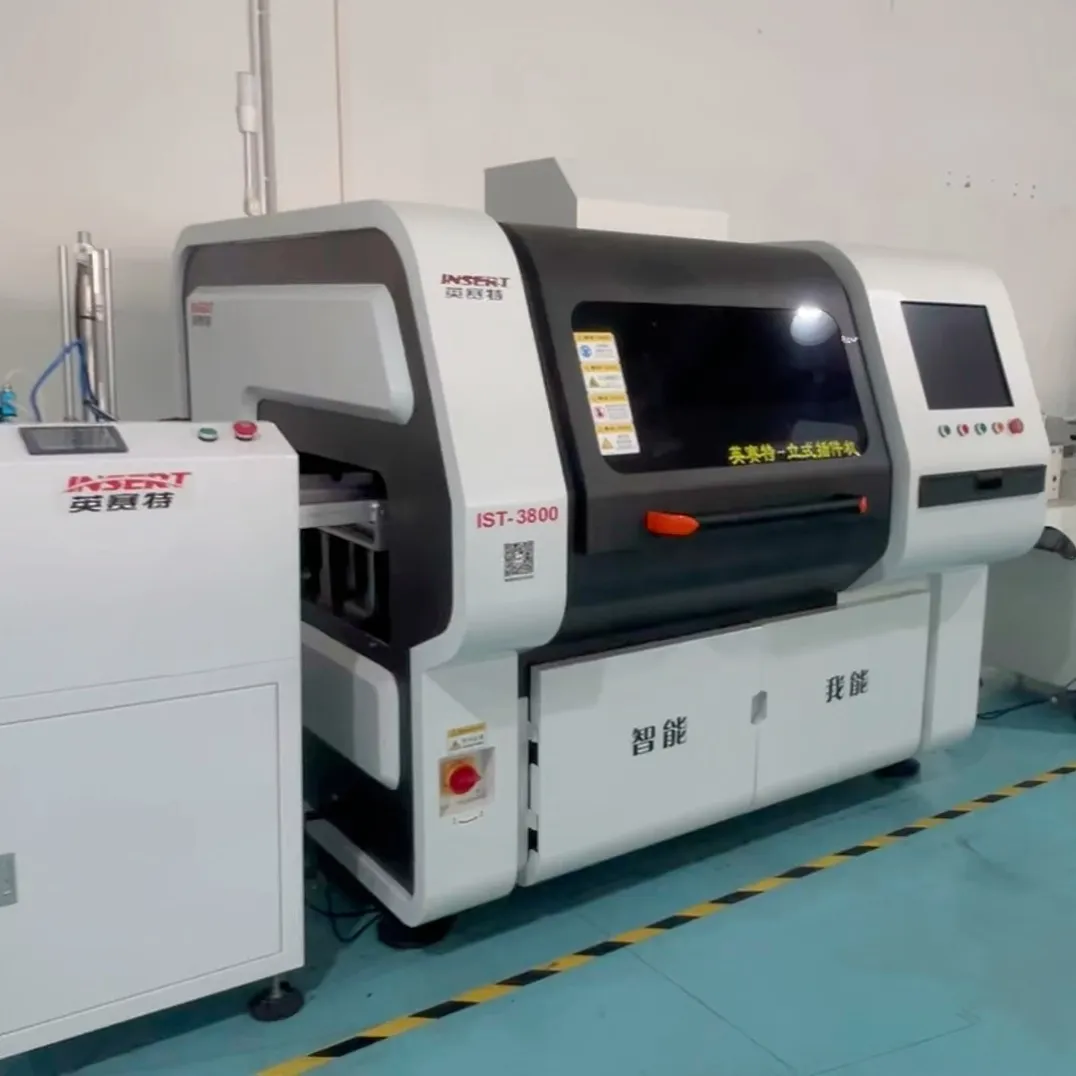
Special Component Insertion Equipment。
For the special components (such as certain interfaces and shielding covers) that cannot be processed by traditional surface mounters in the sensor module, special insertion equipment can be configured for automated insertion, avoiding the loss of accuracy and efficiency bottleneck caused by manual operation. At the same time, this equipment also belongs to the key flexible components in the SMT production line of humanoid robot sensor modules.
2. Process Control and Design Optimization
The reliability of the sensor module directly affects the perception accuracy of humanoid robots. Therefore, special control is required before and after the SMT process.
High-Reliability PCB Design:
Before SMT, the PCB needs to be optimized. The sensor module usually has limited space, so high-density integration technology should be adopted, and the circuit layout should be optimized to reduce signal interference and electromagnetic compatibility issues, ensuring the integrity of the sensor signal during transmission. This is the design difficulty that humanoid robot sensor modules differ from ordinary consumer electronics.
Process Control:
Solder Paste Printing: Use fully automatic high-precision solder paste printers, combined with SPI (Solder Paste Thickness Detector), to ensure the soldering amount of the key pins of the sensor is moderate, avoiding bridging or short circuits.
Reflow Soldering: Due to the sensitivity of sensor components to temperature, precise reflow soldering equipment with temperature zone control should be selected, and the welding curve that meets the specific requirements of the components should be set to prevent thermal damage.
3. Quality Inspection and Data Traceability System
To achieve "zero defect" delivery, a comprehensive automatic optical inspection and data closed-loop system needs to be constructed.
AOI and AXI Inspection
After reflow soldering, configure online AOI (Automatic Optical Inspection equipment). For BGA (Ball Grid Array packaging) or hidden solder joints in the sensor module, AXI (X-ray Inspection equipment) should be introduced to detect invisible solder joints. The parallel use of dual inspections greatly improves the factory yield of humanoid robot sensor modules.
Quality Closed-Loop Control
Connect the surface mounter and AOI inspection equipment for data communication. Once AOI detects a soldering defect (such as offset, pillar), the system can immediately feedback and adjust the soldering parameters, forming a quality closed-loop control. Ideally, this solution can control the product defect rate to below 0.05%, helping the production line achieve a higher pass rate.
Inspection Equipment | Inspection Object | Key Indicators
AOI (Automatic Optical Inspection) | Solder Joint Appearance, Component Missing, Polarity | Resolution 10 μm, Detection Speed > 40 cm²/s
AXI (X-ray Inspection) | BGA, QFN Hidden Solder Joints, Void Rate | Resolution 2 μm, Can Observe at 60°
SPI (Solder Paste Inspection) | Solder Paste Volume/Height/Area | Repeatability < 1 μm (3σ)
4. Line Automation and Intelligent Logistics
The production of humanoid robot sensor modules usually involves multiple varieties and small batch production modes. The production line needs to have high flexibility.
Automated Loading and Unloading System
Introduce mobile operation robots for production line logistics management. For example, using assembly robots similar to "Fuzhi 1", such as the automatic loading, grasping, scanning, and visual-based detection results determination of PCB boards can be achieved. It can recognize the status of the device display (such as PASS/FAIL), and automatically complete the discharging classification or directly transfer to the testing process. The entire humanoid robot sensor module SMT production line becomes more flexible due to the mobile robots.
Intelligent scheduling and collaboration
Line integration of MES (Manufacturing Execution System). Equipment such as surface mounters receive the intelligent scheduling instructions from MES and automatically switch production tasks. When facing the scenario of mixed mounting of high and low density components, the system can automatically assign tasks to avoid excessive load on a single device and ensure balanced production line rhythm, such as meeting the production capacity target of 500 sensor modules per day.
5. Future technology outlook
Flexible electronic skin poses challenges to the "electronic skin" (large-area flexible sensors) required by humanoid robots in traditional SMT processes. The industry is developing laser writing and 3D printing technologies without clean rooms, and in the future, SMT production lines may need to integrate such additive manufacturing modules to directly manufacture sensors on irregular or flexible substrates. This will also be a revolutionary breakthrough in the manufacturing process of humanoid robot sensor modules.
Introduction of new sensors follows the improvement of the feedback accuracy requirements of robots for joint torque, such as the assembly accuracy requirements of precision components like resolver sensors are higher. This requires fixtures and equipment of the SMT production line to have the ability to handle such special components. The new generation humanoid robot sensor module SMT production line must be compatible with various packaging forms.
We focus on providing the following SMT equipment production solutions for electronic.
manufacturers:
Printing machines, SPI, surface mounters, AOI, reflow soldering, X-Ray, etc. for the entire SMT production line equipment;
Assembly machines, connection tables, coating machines, dispensing machines, receiving machines, etc. for SMT peripheral equipment;
Feeder, suction cups, boards, valves, belts, spare parts, consumables, etc. services and solutions.